
Everyone Sees Everyone
Why I Keep Running Into the Same Strangers Around the World

Mysterious encounters
Meeting strangers while traveling solo can feel both fun and mysterious.
In February, I attended a dance festival in Mazunte, a small beach town on the Pacific coast of Mexico. I had visited around the same time last year, and it quickly became my favorite spot on earth—for warm weather, the ocean, whales, and its hippie yet international vibe.
The tiny town is saturated with green and the sounds of nature. My Merlin Bird ID app detected eight different colorful tropical birds singing at all times—minus the roosters. Somehow the app didn’t count roosters as birds, even though they made the loudest sound. I found that funny.
Saturated with yoga studios and wellness programs, the town attracts young, fit, beautiful people from all over. Travelers with dark tans, bare feet, and bikinis frequent vegan cafés, co-working spaces, yoga studios, and of course, the beach. Many travel solo, like me.

Traveling solo can feel alone, but the friendly body of travelers passing by adds a quiet sense of company throughout the stay. Two strangers start talking. Travel stories are exchanged. Laughter appears easily. Just a brief encounter—no phone numbers, no plans to meet again.
And yet, something strange kept happening.
I kept running into the same strangers.
Of course, there is a rational explanation. Mazunte is small. Travelers follow similar rhythms. Statistically, it makes sense that the same faces reappear.
And yet, each time it happened, it felt slightly mysterious.
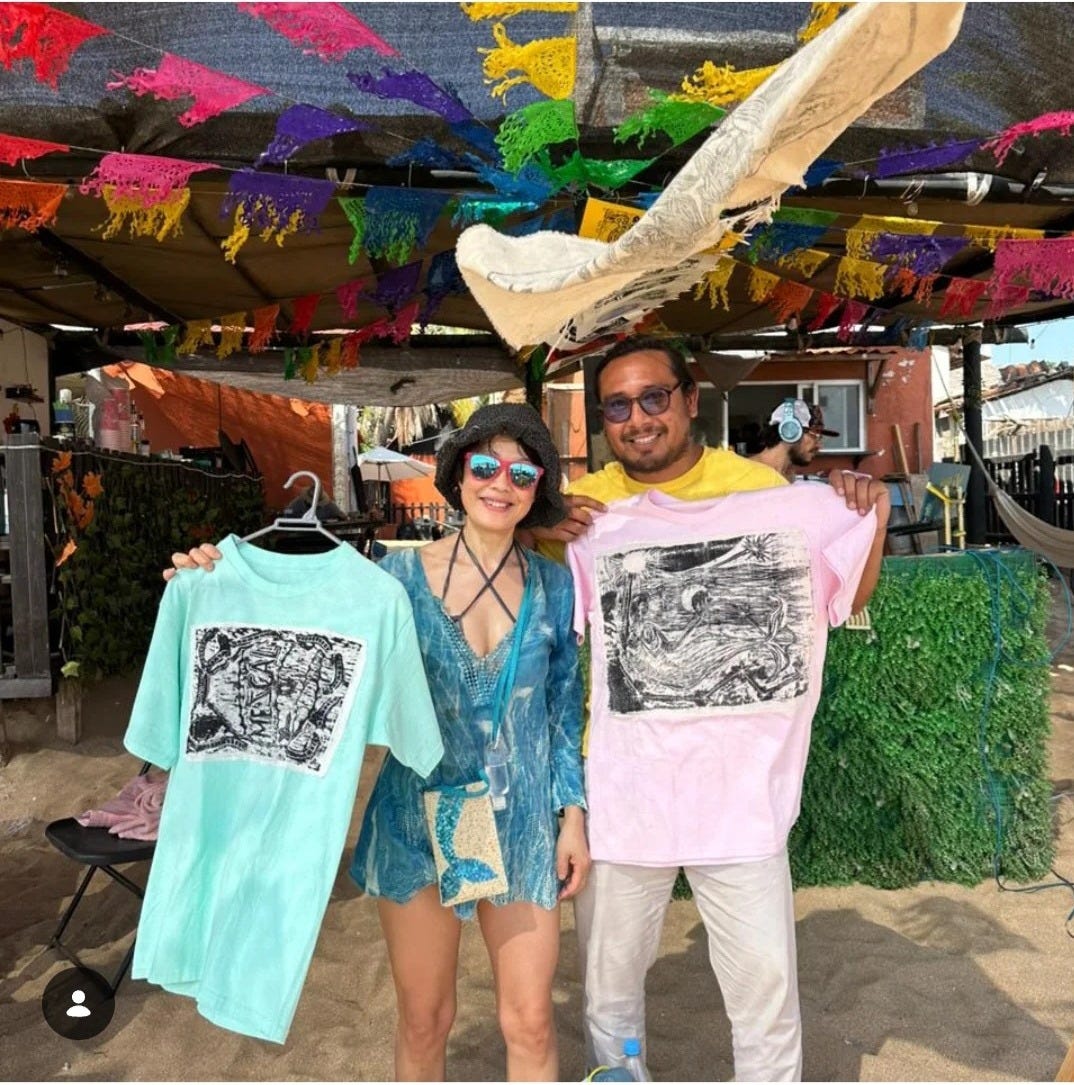
Everyone Sees Everyone
Around the same time, I heard a story that deepened this feeling.
A student studying abroad in London traveled to Budapest for a weekend and kept running into people from her high school back in the U.S..
Not one or two—but nearly fifteen.
Different sites. Different groups. Even a cruise on the Danube. None of it coordinated.
Someone in the group laughed and said:
“Everyone sees everyone.”
If the probability of crossing paths is understandable in a tiny beach town, what explains teenagers from different colleges in the U.S., choosing the same weekend (not Spring break, not holiday) to visit the same European city and running into one another?
What are the odds of that?
缘分 – A magical Chinese word on “fate”
Chinese people believe in
缘分 (yuán fèn)
I find it difficult to translate into English. “Fate” may be the closest word, but the meaning is subtler.
It suggests that certain encounters happen because time, place, and circumstances align.
A famous saying comes to mind:
有缘千里来相会 (yǒu yuán qiān lǐ lái xiāng huì)
If there is ‘yuan fen’, people will meet even from a thousand miles away.
无缘对面不相识 (wú yuán duì miàn bù xiāng shí)
Without ‘yuan fen’, people may stand face to face and remain strangers.
The phrase doesn’t insist that destiny controls everything. It simply acknowledges that some paths cross—for reasons we may not fully understand.
When a Connection Reappears
During my two-week stay at Mazunte, I visited the Sunday market filled with pottery, handmade crafts, and local food. And right there, a familiar figure passed me.
Wait. That’s the guy I met swimming in the ocean last February.
As much as I love swimming, going far out alone feels intimidating. Last year, I noticed a small group already in the water and joined them. One of them was Miles, a New Yorker.
Now here he stood again.


He looked slightly different, maybe having gained some weight. I said hello. He smiled and said he remembered me, though he had forgotten my name.
For a moment, it felt like a small example of
缘分 (yuán fèn)
— meeting again in the same remote town, at the same time of year.
It must mean something, I thought.
I suggested we meet again for snorkeling, and we exchanged contact information.
But even as we did, I sensed it probably would not happen.
And it didn’t.
No message came. No snorkeling meetup. Our crossing ended there, at the market.
Connection ≠ Attachment
That small moment clarified something for me.
Perhaps 缘分 creates connection, but it does not indicate attachment.
You can meet someone once—or even twice. You can share a conversation, recognize each other again, feel a brief spark of familiarity.
But that does not mean the connection will continue.
Sometimes we try to turn these moments into something more. We exchange contact information. We suggest plans. We attempt to extend what may have been complete in itself.
Yet attachment cannot be forced simply because a connection existed.
The meeting may be natural.
The continuation requires something else entirely.
I have seen this pattern before—not only in travel, but in workshops, in temporary communities, even in my own life. Strong connections form quickly in special containers. But with distance and time, intensity fades. What remains is memory, and maybe longing or even grief.
Across the sea kind of “neighbors”
Travel reveals how many invisible crossings exist in the world.
People appear briefly in our lives—on beaches, in markets, in cities far from home. For a moment, our paths intersect.
Then they disappear.
I have rationalized it as a dance in contact improvisation, either a duet or a trio. We could have the best dance and sync in every movement, yet when the dance finishes, we leave and move on, continuing our lives without knowing anything about our dance partners.
Real dance, real connection at the somatic level, or even at the heart level, but never meant to become attachment.
And yet—not all connections disappear.
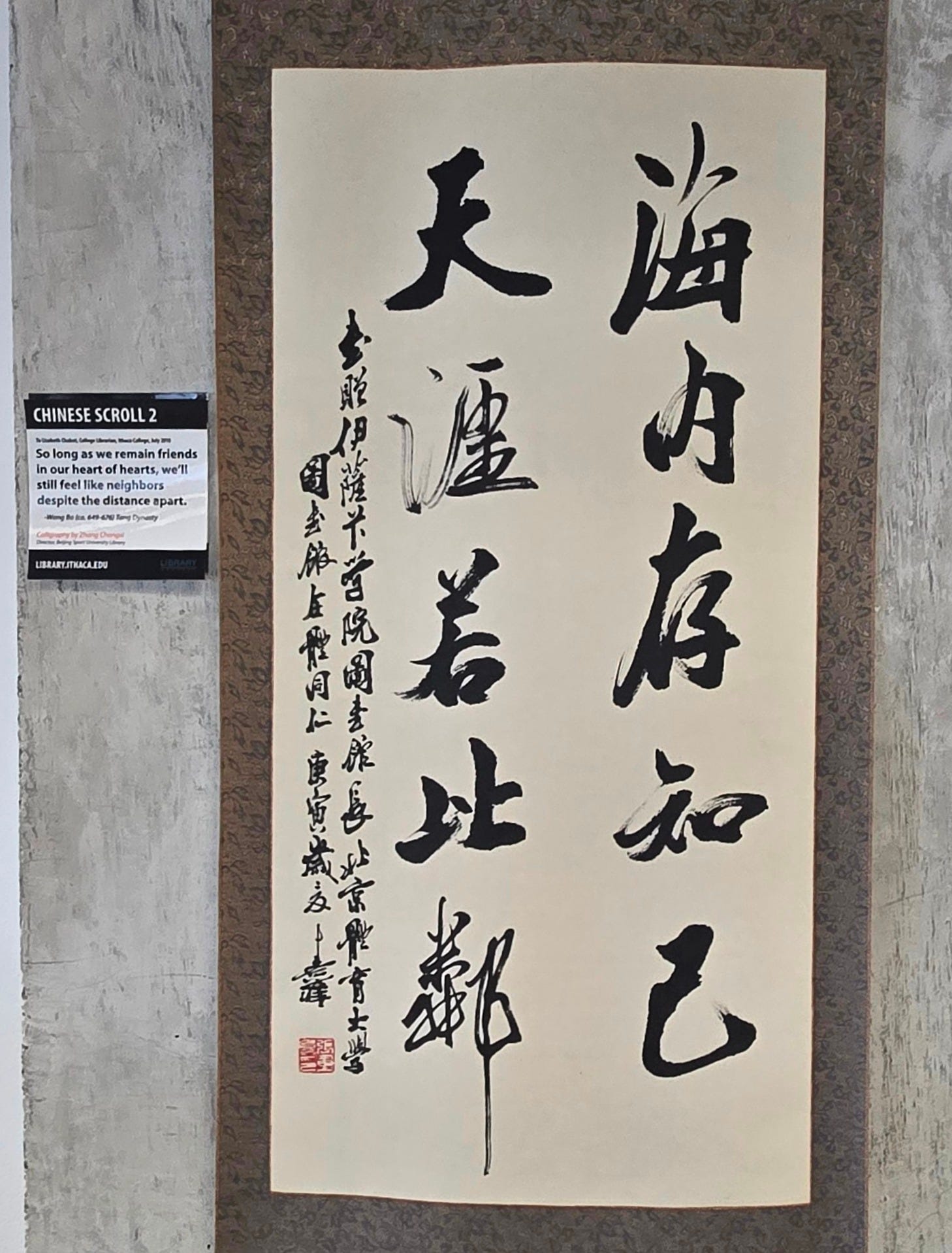
I recently visited Ithaca College in New York and saw a Chinese scroll with a famous poem:
海内存知己 (hǎi nèi cún zhī jǐ)
If you have a true confidant within the four seas,
天涯若比邻 (tiān yá ruò bǐ lín)
even at the far edges of the sky, it feels as though you are neighbors.
That is how I feel about meeting Chen—a beautiful, courageous young woman originally from China, now living in Mazunte. She designs and dyes clothing with local plants that have medicinal qualities. I met her randomly at her boutique store through a dancer I first met at my workshop. We had little time before my flight—two hours of conversation over Kungfu tea, two minutes of dance, and two gorgeous items from her store.
Even now, my mind drifts back to her and to Mazunte.
Some connections dissolve. Some linger across time and distance.

The world is enormous, yet strangely intimate. We meet interesting people, feel genuine connection, say goodbye, and move on.
Maybe this is what 缘分 truly offers — not permanence, but encounter.
Another Chinese saying comes to mind:
人生何处不相逢 (rén shēng hé chù bù xiāng féng)
In life, where will we not meet again?
And in that sense, perhaps everyone sees everyone.
Have you ever experienced something like this — meeting the same stranger again in a completely different place?
If so, I’d love to hear your story in the comments.
Mazunte sounds like a wonderful place to travel. I would’ve laughed at the roosters not being ID-ed too.